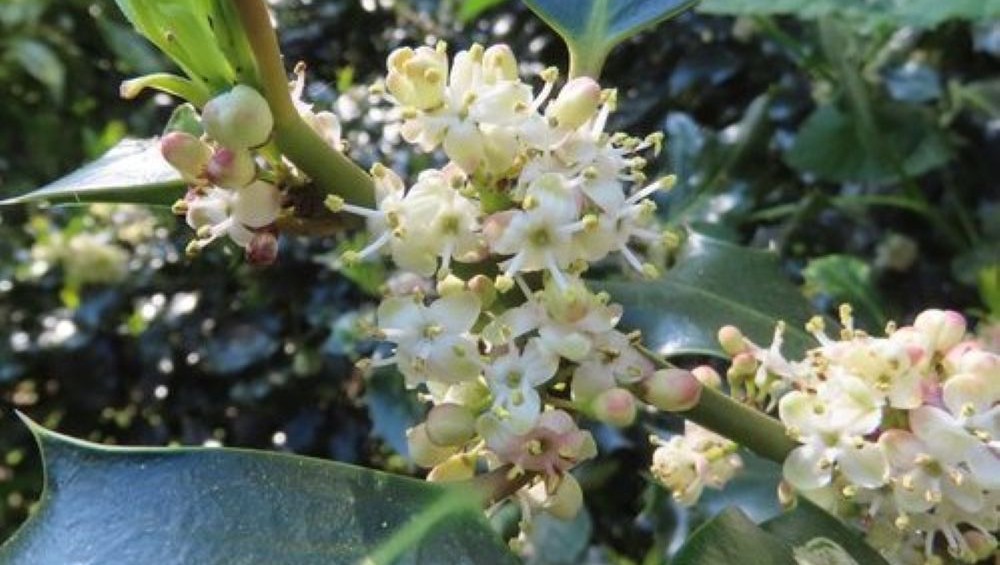
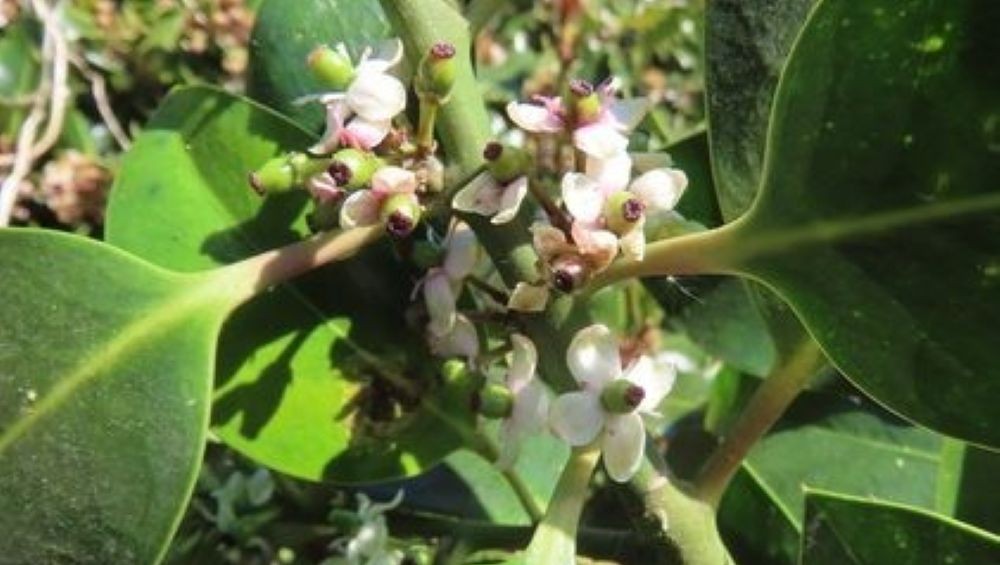
Holly (Ilex aquilifolium) is our only evergreen native flowering plant tree. Unlike all our other native trees it is dioecious, meaning that male and female flowers grow on separate plants. As a consequence, only females produce the very familiar yuletide red berries. However, the best time to distinguish males and females is during April and May when the plants are flowering. Holly is insect pollinated whereas most of our other native trees are wind pollinated. The male flowers are readily distinguished by their prominent stamens. Pollen released from these is transferred mainly by bees, to the pistils on the female flowers as they seek nectar.
Berry production is dependent on an overlap between the male and female flowering times and weather suitable for bee activity. We do not know precisely how these factors might be affected by climate change so we need to keep accurate records of the period of holly flowering.
When next you visit the CREOS area, see if you can identify the male and female holly flowers and spot the pollinating bees.